GRC Interview Questions: Why Risk Prioritization Is Not a Checklist
Your company is launching a new customer portal and leadership wants the security findings prioritized. A weak answer says "sort by CVSS and fix the criticals first." A strong answer starts with business context, identifies which assets and business processes are actually at risk, evaluates likelihood and impact together, and ties treatment decisions to what the organization is trying to protect.
The Common Mistake
Most GRC interview failures come from answering a risk question like it is a vulnerability management question.
"I would rank the findings by severity, address the critical items first, then move down the list."
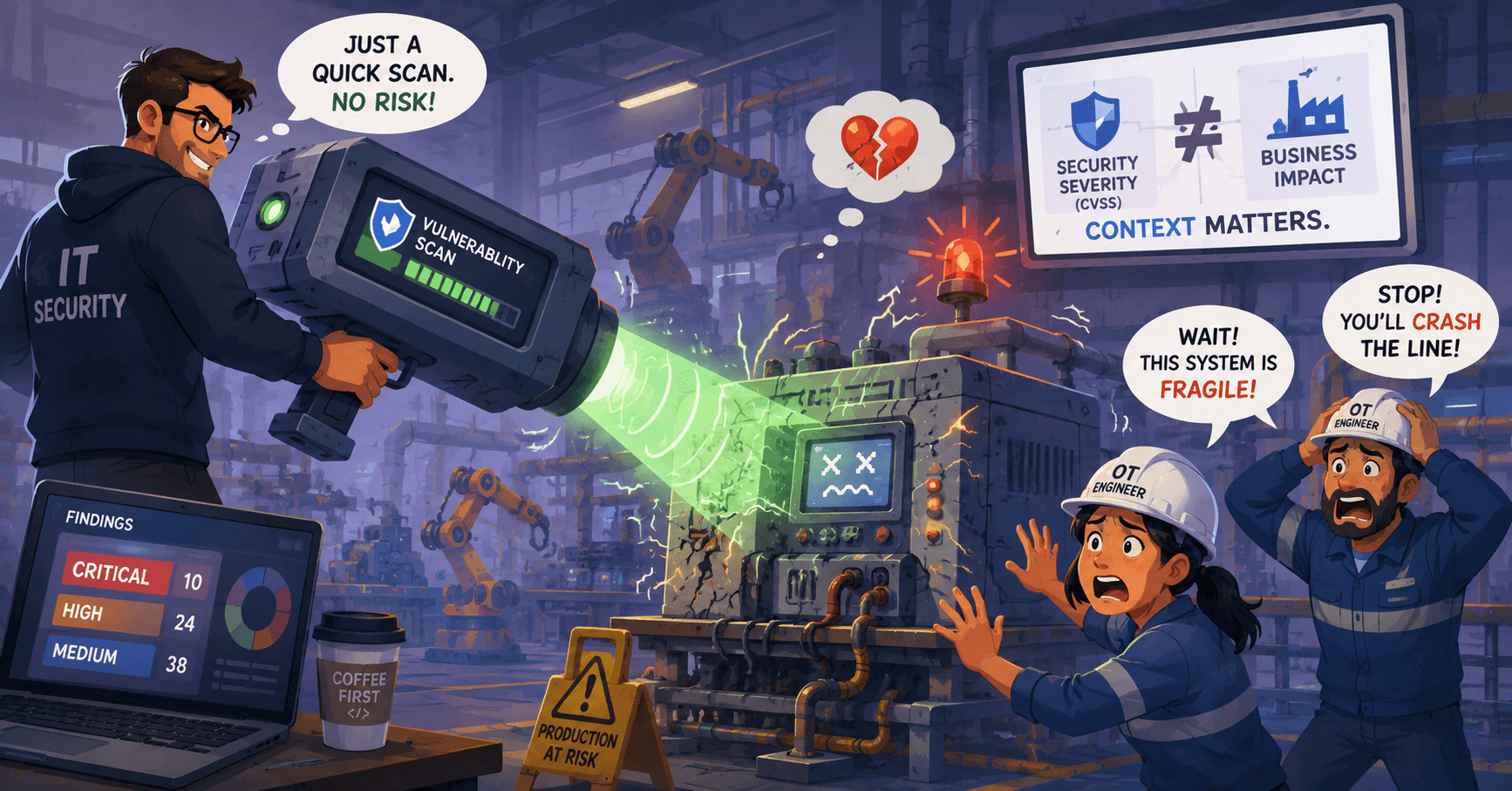
That is tidy, but it is not risk analysis. Severity is only one ingredient. A technically severe issue on a low-value internal system may matter far less than a moderate issue on a customer-facing authentication flow. If the candidate never mentions customer data, availability requirements, fraud exposure, or legal impact, they are not prioritizing risk. They are sorting tickets.
This is where framework memorization becomes a trap. Candidates who know the language of NIST or ISO sometimes still fail the actual question because they cannot translate controls into business consequence. Risk work is about treatment decisions under constraints. If an answer has no asset context, no likelihood reasoning, and no treatment options beyond "fix it," interviewers hear checklist thinking rather than governance thinking.
What Interviewers Are Testing For
This question tests whether the candidate can turn findings into risk decisions. The strongest answers show a chain of reasoning from asset, to threat, to likelihood and impact, to treatment.
Interviewers usually expect to hear:
- Identification of what the portal truly puts at risk, such as customer data, authentication integrity, service availability, and contractual obligations.
- Consideration of realistic threats for a customer-facing system instead of broad generic fear.
- Prioritization based on risk, which means likelihood plus impact, not severity labels alone.
- Treatment recommendations that fit business context, such as mitigation, transfer, acceptance, or avoidance.
Weak answers usually fail because they:
- Equate risk assessment with scanning.
- Treat CVSS as a decision engine.
- Ignore business impact and legal exposure.
- Recommend fixes without discussing treatment options or trade-offs.
Framework: Risk Prioritization
| Component | Weak Version | Strong Version |
|---|---|---|
| Starting point | Begins with scan severity | Begins with assets, business process, and exposure |
| Threat model | Uses generic threats with little context | Focuses on threats realistic for a customer-facing portal |
| Prioritization | Sorts by severity labels | Combines likelihood, impact, and business criticality |
| Treatment | Assumes everything must be fixed immediately | Recommends treatment options tied to business reality and residual risk |
Strong Answer Breakdown
A strong answer usually sounds like a business-aware assessment, not a control catalog:
"For a new customer portal, I would first identify what matters most: customer data, authentication paths, payment or account actions if they exist, and the service availability the business is promising. Then I would look at the threats most relevant to that exposure, such as account compromise, data leakage, abuse of weak authorization, and outage risk.
Once the findings are tied to those assets and threats, I would prioritize based on likelihood and impact together. A flaw affecting authentication or customer data may rank ahead of a technically severe issue on a low-value supporting system. The question is not just how bad the weakness is in theory, but what it could do in this business context.
Finally, I would recommend treatment options. Some risks should be mitigated immediately, some may be accepted temporarily with compensating controls, and some may require design changes if the business impact is high enough."
That answer maps directly to the expected answer. It starts with assets at risk, considers relevant threats, evaluates likelihood and impact together, and ties treatment to business context. The important shift is that the candidate is not asking "which finding is most severe?" They are asking "which exposure matters most to this business, and what should we do about it?" That is the actual GRC skill being tested.
Why This Distinction Matters
Organizations do not fail because they had too few spreadsheets. They fail because they spent time fixing the wrong things first, accepted risk without understanding it, or confused audit structure with decision quality. Good GRC work helps leadership spend limited time and money where it reduces real exposure.
That is why interviewers care so much about prioritization logic. Framework knowledge is useful, but the durable skill is translating findings into business decisions that survive budget pressure and competing priorities.
Red Flags
- CVSS-only prioritization. Severity labels are treated as if they already represent business risk.
- Scan equals assessment. The answer never moves beyond technical findings into impact and treatment.
- No asset context. Customer data, authentication, and availability never shape the prioritization.
- No treatment options. Every answer collapses into "fix it" with no discussion of acceptance or trade-offs.
- Framework recital. Standards are named without being used to make a decision.
Key Takeaways
- When asked to prioritize findings, a practitioner should start with the business process and assets because risk depends on what is actually being put in danger.
- When a finding looks technically severe, a practitioner should still test likelihood and impact because severity alone is not a treatment decision.
- When a customer-facing portal is being assessed, a practitioner should focus on realistic threats because generic threat lists hide what matters most.
- When presenting priorities, a practitioner should recommend treatment options in business terms because GRC work exists to support decisions, not just documentation.
Related articles
 Security Strategy
Enterprise AI Governance: How to Secure LLM Usage Without Slowing Down Innovation
 Security Strategy
The AI Vulnerability Storm: Building a Mythos-Ready Security Program
 Threat Analysis