Cybersecurity Internship Interview Questions and How to Answer Them
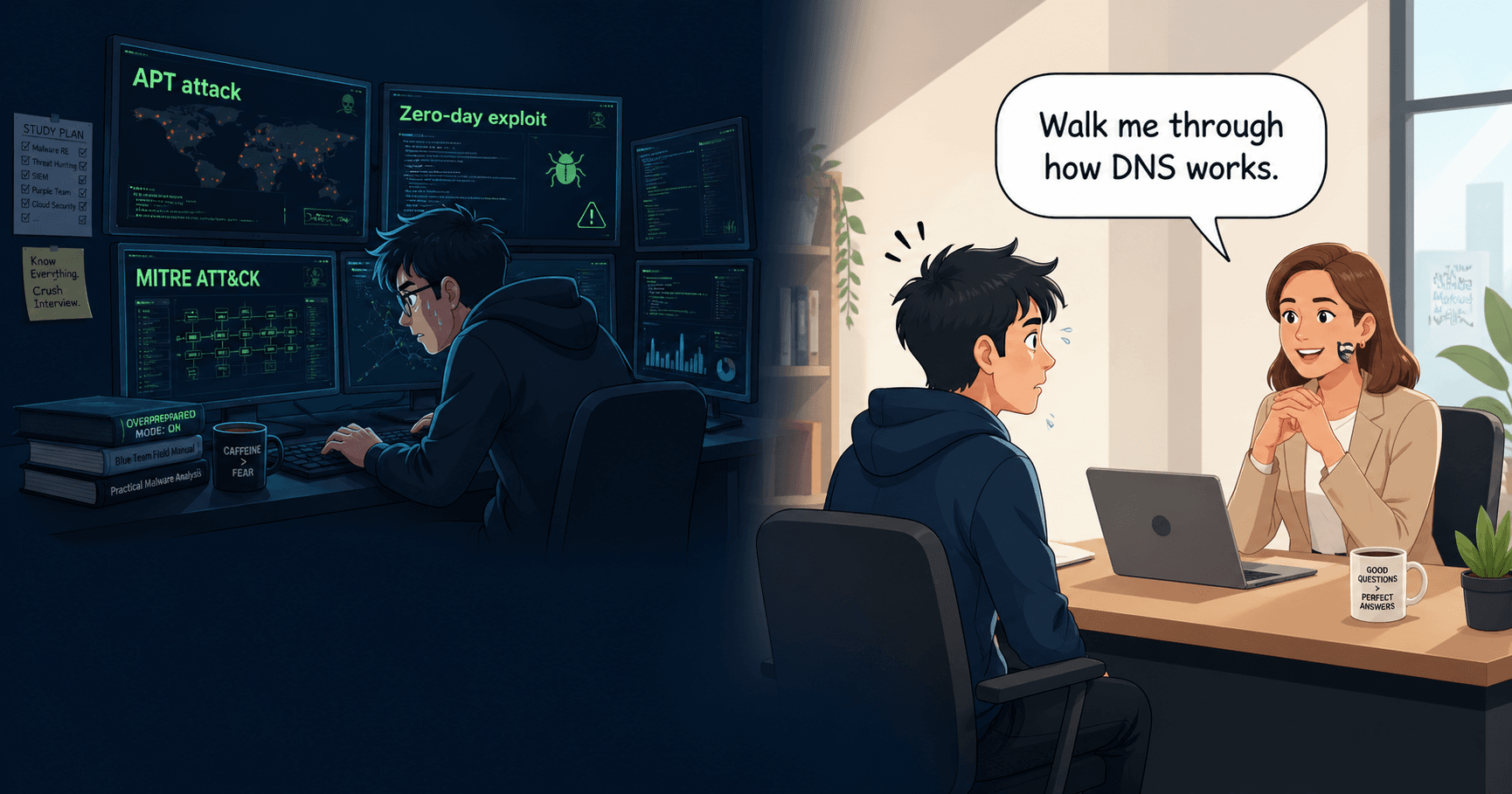
Here is something internship candidates rarely hear: most cybersecurity teams set a low technical bar for interns on purpose. They already know you are a student. They already know your production experience is limited. What they are actually evaluating is whether you can turn twelve weeks of access into something useful, or whether you will need so much hand-holding that the team loses more productivity than it gains.
That sounds harsh, but it works in your favor once you understand it. The interview is not a pop quiz on security knowledge. It is a conversation about how you think, how you communicate, and whether you have done anything beyond attending lectures.
The twelve-week constraint shapes everything
An internship is not a permanent hire. The team has a short window to give you meaningful work, coach you through it, and evaluate whether they want to extend a return offer. That constraint shapes the interview in ways candidates do not always notice.
Questions lean toward scope and self-direction: Can you take a well-defined task and make progress without constant check-ins? Do you ask good questions early instead of getting stuck quietly for three days? Can you write up what you found in a way someone else can act on?
This is why "tell me about a project" is not a throwaway question. It is the interviewer testing whether you can describe scope, process, and outcome clearly, because that is exactly what the internship will require.
Translating coursework into interview answers
Most students have more useful experience than they realize. The problem is packaging. Saying "I took a network security class" tells the interviewer nothing. Saying "In my network security class, we analyzed packet captures from a simulated attack, and I was the one who identified the C2 beaconing pattern based on the timing intervals" gives the interviewer something to work with.
The formula is straightforward: what you did, what was hard about it, and what the outcome was. Strip out the course name and grade. Interviewers do not care that you got an A. They care that you can describe the work.
Good sources to mine for interview stories:
- A class lab where you investigated an incident or configured a security tool
- A group project where you handled the security or infrastructure component
- A capture-the-flag competition, even if you placed poorly
- A personal project where you explored something beyond the syllabus
One project described well beats five projects described vaguely.
The questions you should expect
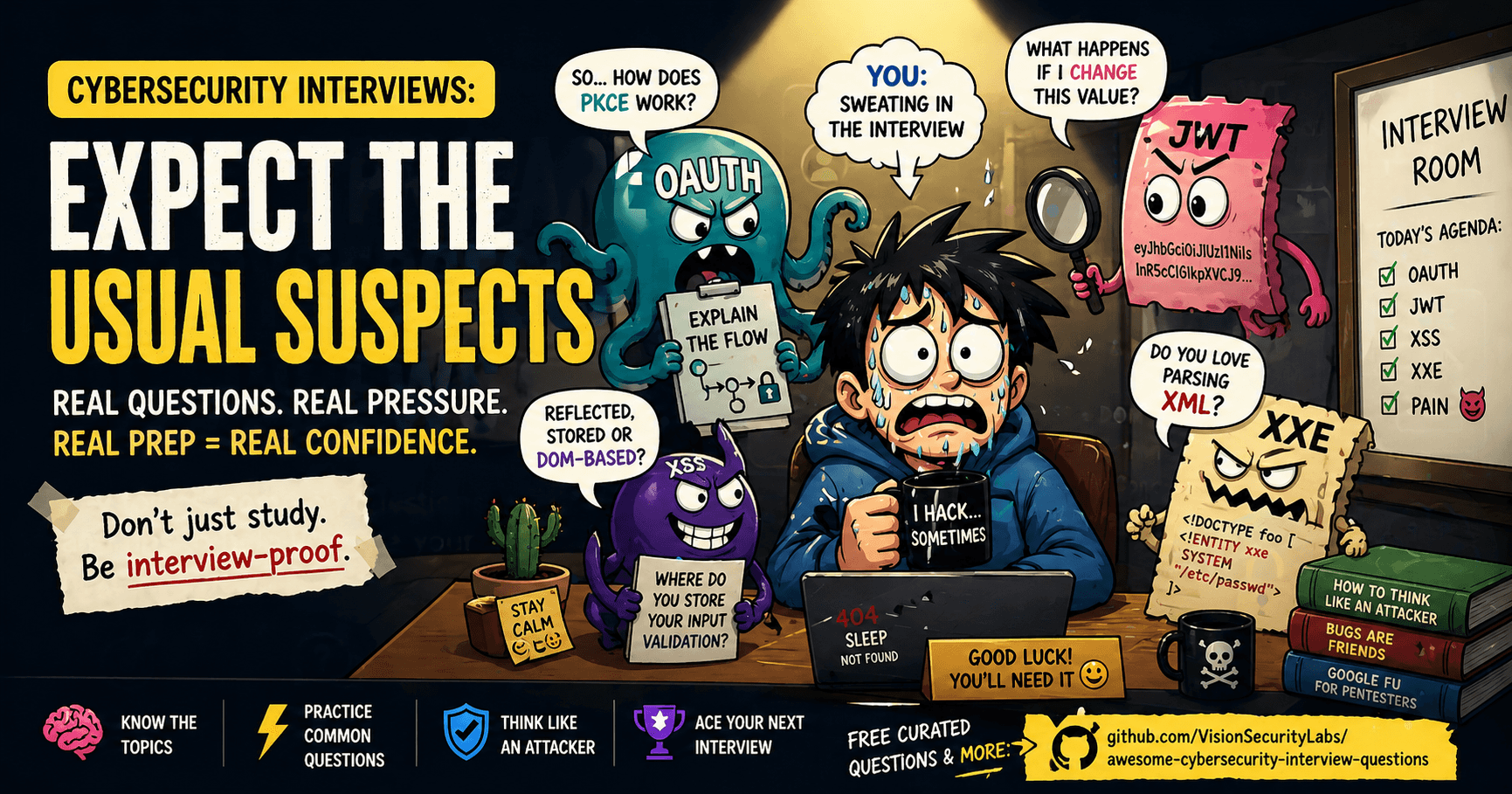
Cybersecurity internship interviews cluster around a predictable set of topics. You will likely face some combination of:
- How would you investigate a suspicious email reported by an employee?
- What is the difference between a vulnerability and a threat?
- Why do we collect logs, and what would you look for in them?
- What happens at a high level when you visit a website?
- Describe a technical project you completed and what you learned.
- What area of security interests you and why?
The technical questions check whether your understanding is real or surface-level. The project question checks whether you build things. The "what interests you" question checks whether you have direction or are just applying everywhere.
Precision matters more than depth
Here is where internship interviews get specific. The depth expectation is low, but the precision expectation is surprisingly high. Interviewers would rather hear "I do not know how SAML works in detail, but I understand it is a federated authentication protocol that lets users authenticate through a trusted identity provider" than a rambling guess that mixes up authentication and authorization.
Get comfortable with partial answers that are accurate. "I have not done this in production, but here is what I understand at a conceptual level" is a perfectly strong answer for an intern candidate. Bluffing is not.
When practicing, pay attention to whether your answers contain filler. Words like "basically" and "sort of" are signals of imprecision that interviewers notice, especially when they show up in technical explanations.
Team fit carries real weight
Interns sit with the team every day. Unlike a contractor or a remote consultant, you will be in standups, in Slack channels, asking questions, and occasionally slowing someone down while you learn. That is expected and fine. But the interview is partly testing whether slowing down for you will feel worthwhile or exhausting.
The signals are small. Do you listen before talking? Do you take notes? If the interviewer corrects something you said, do you absorb it or push back defensively? Do you ask follow-up questions that show you actually processed the previous answer?
You cannot fake these signals. But being aware that they matter is usually enough to let your natural curiosity come through instead of being buried under interview nerves.
A preparation checklist
Before the interview, make sure you have these ready:
One technical project you can narrate in under two minutes. Include what you did, what was hard, and what you would do differently. Practice the timing. Candidates tend to ramble on project questions, and a tight two-minute version is more impressive than a five-minute wander.
Three security concepts you can explain cleanly. Pick from the basics: phishing, least privilege, authentication vs. authorization, why patching matters, what logs are for. Explain each as if you are talking to a smart colleague who is not in security.
One specific reason you want this internship. Not "I want to learn cybersecurity." Something about the company, the team's work, or the domain they operate in that connects to what you are genuinely curious about.
One honest gap you are working on. "I have not done much with cloud security yet, so I started working through the AWS security fundamentals material last month" lands much better than pretending you have no weaknesses.
If you are earlier in your search and still deciding between internships, apprenticeships, and direct entry roles, our apprenticeship interview guide covers how structured training programs evaluate candidates differently. If you are leaning toward a SOC internship specifically, the junior SOC analyst interview breakdown is the more targeted next step.