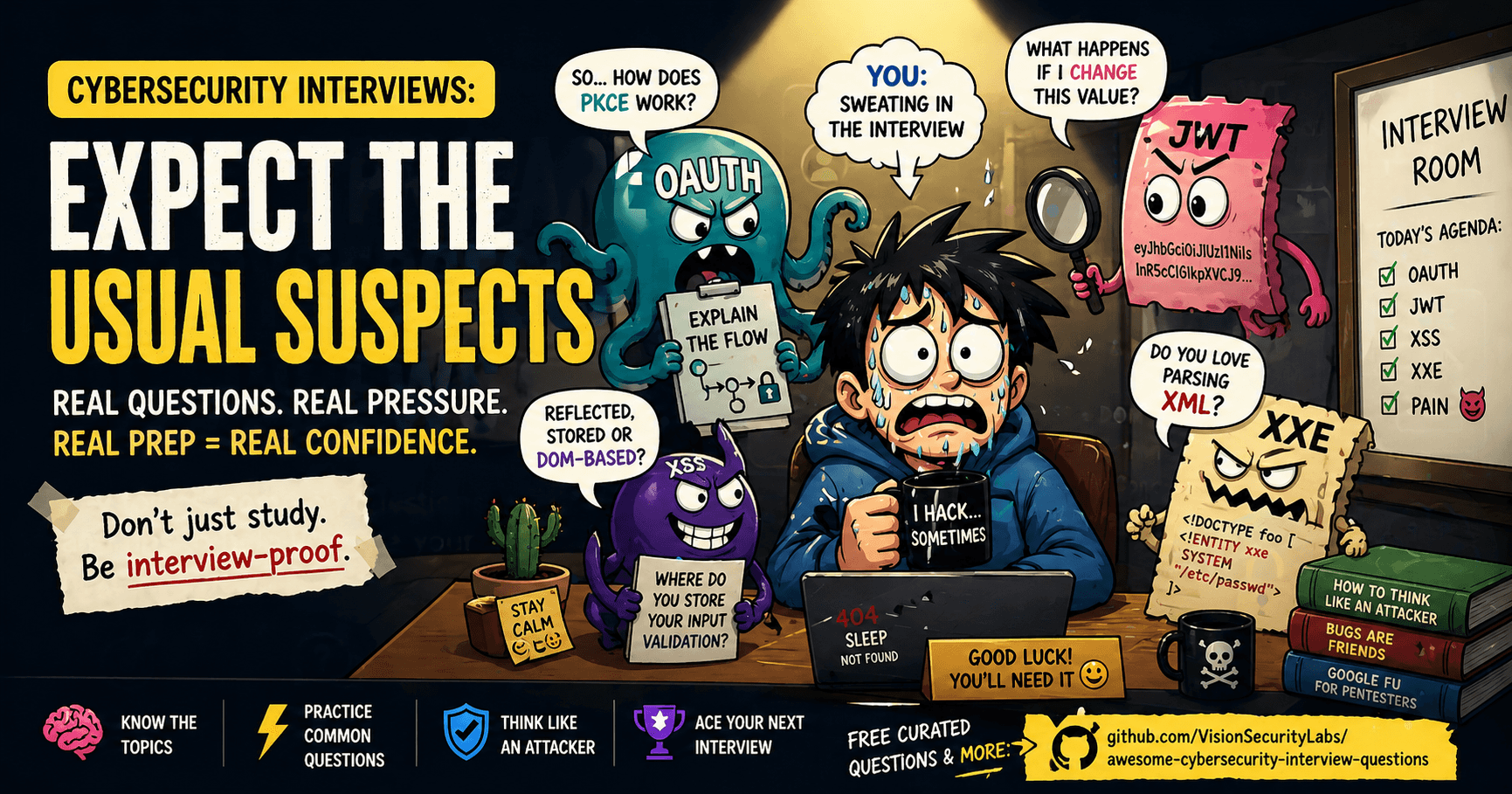
Seven Answer Patterns That Make Security Hiring Managers Hesitate
After years of sitting on cybersecurity hiring panels, I can usually tell within the first two answers whether a candidate is going to get an offer. Not because of what they know, but because of how they reason. The red flags that concern interviewers are rarely about knowledge gaps. They are about patterns that suggest the candidate has memorized answers instead of learning how to think through problems.
Here are the patterns that make hiring managers hesitate, with concrete examples of what they sound like.
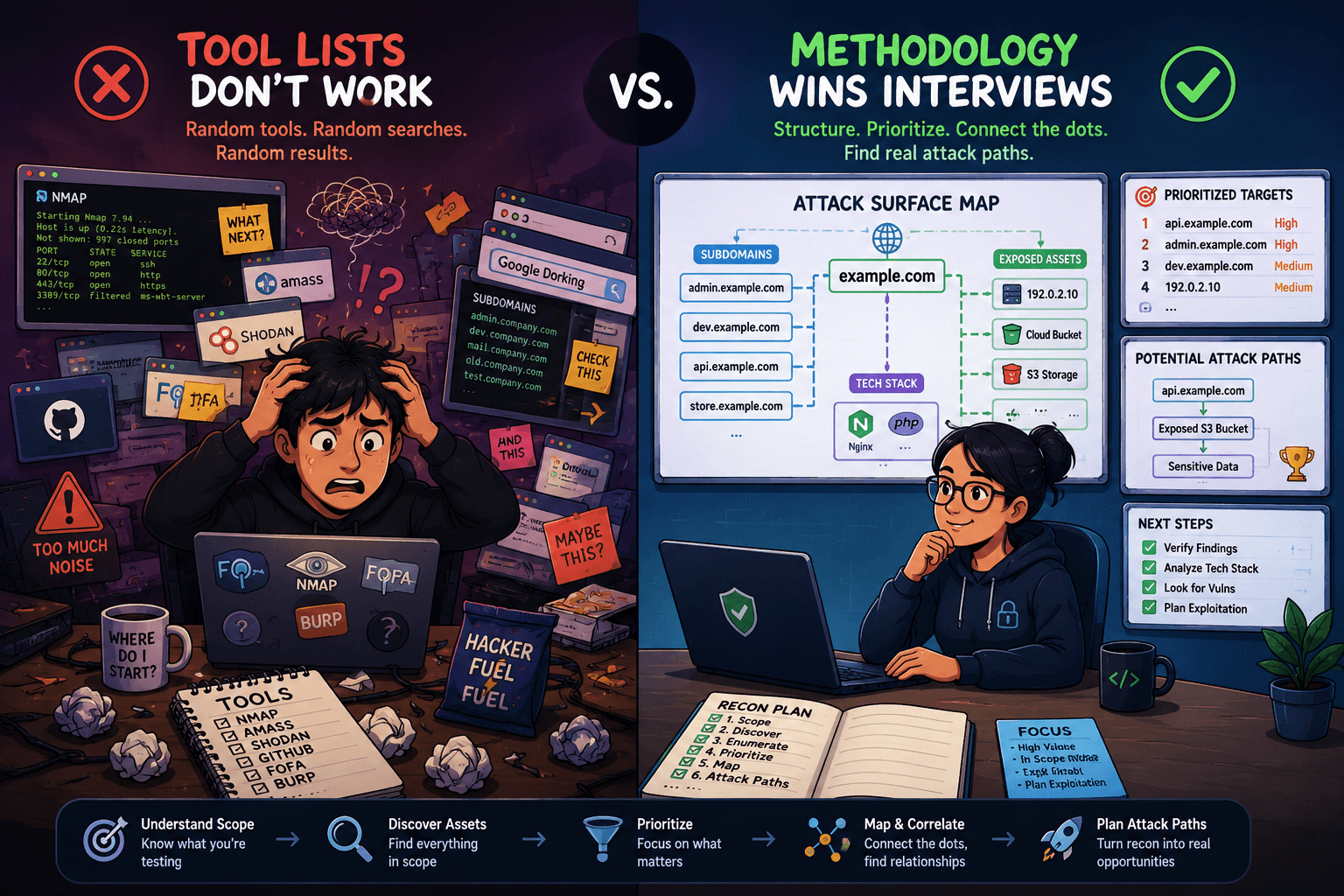
1. Jumping straight to tools
This shows up in nearly every role category and it is the most common red flag.
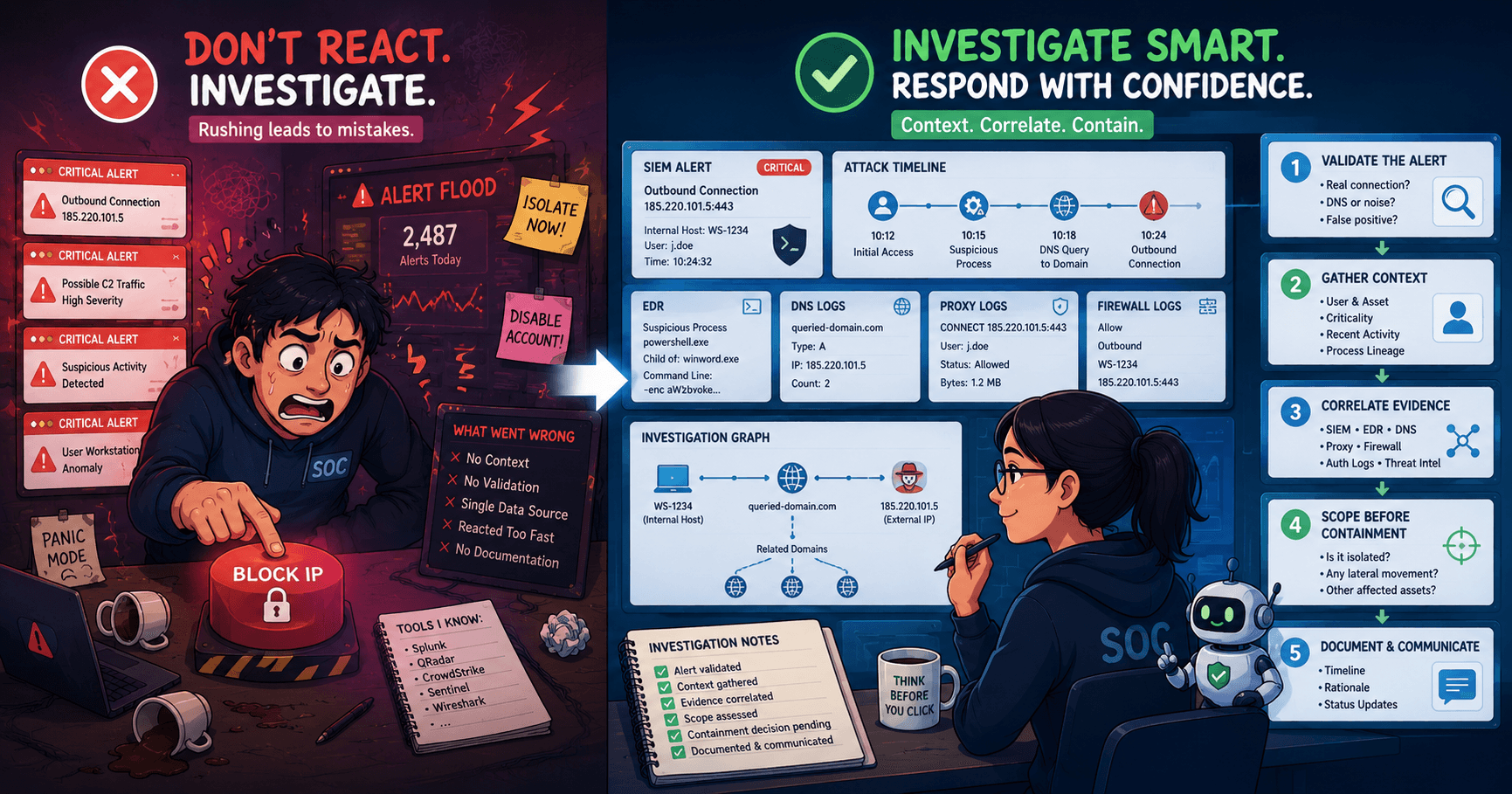
The question: "You receive an alert that a user account logged in from two different countries within 30 minutes."
Red flag: "I would open Splunk and search for the username, then check CrowdStrike, then look at the firewall logs."
This lists tools without reasoning. What hypothesis is being tested? Why those tools in that order? What would confirm or deny malicious activity?
A stronger answer starts with the question, not the dashboard: "First, I want to understand whether this is plausible. Is the account a traveler? Does the org use VPNs or regional proxies?" The tools come after the thinking. This is what SOC interviews specifically test for.
2. Skipping the process and jumping to outcomes
Interviewers ask process questions to hear your reasoning. When you skip to the conclusion, it signals memorization.
The question: "How would you approach a phishing investigation?"
Red flag: "I would analyze the email headers, check the links on VirusTotal, quarantine the email, and block the sender."
This is a checklist, not an investigation. What if multiple users received it? What if some clicked the link? What if it is a targeted spear-phish rather than a bulk campaign? The response depends on what the investigation reveals, and strong candidates say so.
3. Overconfidence about tool coverage
This is common among candidates with two to four years of experience who have not yet encountered enough edge cases.
The question: "The EDR shows no activity on a host, but there are suspicious network flows from its IP."
Red flag: "That must be a false positive. If anything was running, the EDR would have caught it."
EDR misses things. Attackers disable agents. Misconfigured policies create gaps. A strong candidate says: "I cannot trust absence of evidence here. I would verify the agent is running and check network flow data and DNS independently." The difference is intellectual honesty about the limits of any single data source.
4. No trade-off awareness
Security decisions almost always involve trade-offs. The textbook answer without context concerns interviewers because real work requires those trade-offs constantly.
The question: "Should you block all PowerShell execution on endpoints?"
Red flag: "Yes, because PowerShell is commonly used in attacks."
Better: "It depends on the environment. PowerShell is also used extensively for legitimate administration. A blanket block would create operational disruption and get walked back quickly. Constrained language mode or script block logging with behavioral detection gives visibility without breaking workflows." Same knowledge, but the candidate acknowledges context matters.
5. Never asking clarifying questions
In a real security role, you never have perfect information. Candidates who accept every question at face value and answer without asking for context worry interviewers.
The question: "How would you respond to a ransomware infection?"
A strong candidate starts with: "Can I ask a few things first? Is this a single endpoint or a detected spread? Do we have known-good backups? The response priorities change significantly." This tells the interviewer you understand IR is situational, not scripted.
6. No curiosity about root cause
Focusing entirely on remediation without investigating how the compromise happened is a concern, especially for senior roles. Organizations that never understand root cause repeat incidents.
The question: "A credential stuffing attack succeeded. What do you do?"
Red flag: Reset the password, enable MFA, block the source IPs. Done.
The missing questions: Why did the credential work? Was it reused from a breach? Why did existing controls not catch the stuffing attempt? What does this tell us about the account's risk profile? Treating an incident as a ticket to close rather than information about organizational risk is a significant gap.
7. Generic answers that could describe any role
"I worked with the team to solve a problem and we learned from it." If your behavioral answers could apply to any job at any company, the interviewer cannot assess them. Specificity is what makes an answer credible.
How to catch your own red flags
Record yourself answering a practice question. Listen back and ask: Did I explain my reasoning or list steps? Did I acknowledge what I do not know? Did I mention what could go wrong? Did I ask clarifying questions?
Most candidates are surprised by how much they skip. The fix is slowing down and narrating your thinking rather than racing to the conclusion.
The fastest way to catch your own red flags is to practice out loud. MyKareer lets you do that with instant feedback. Start free.