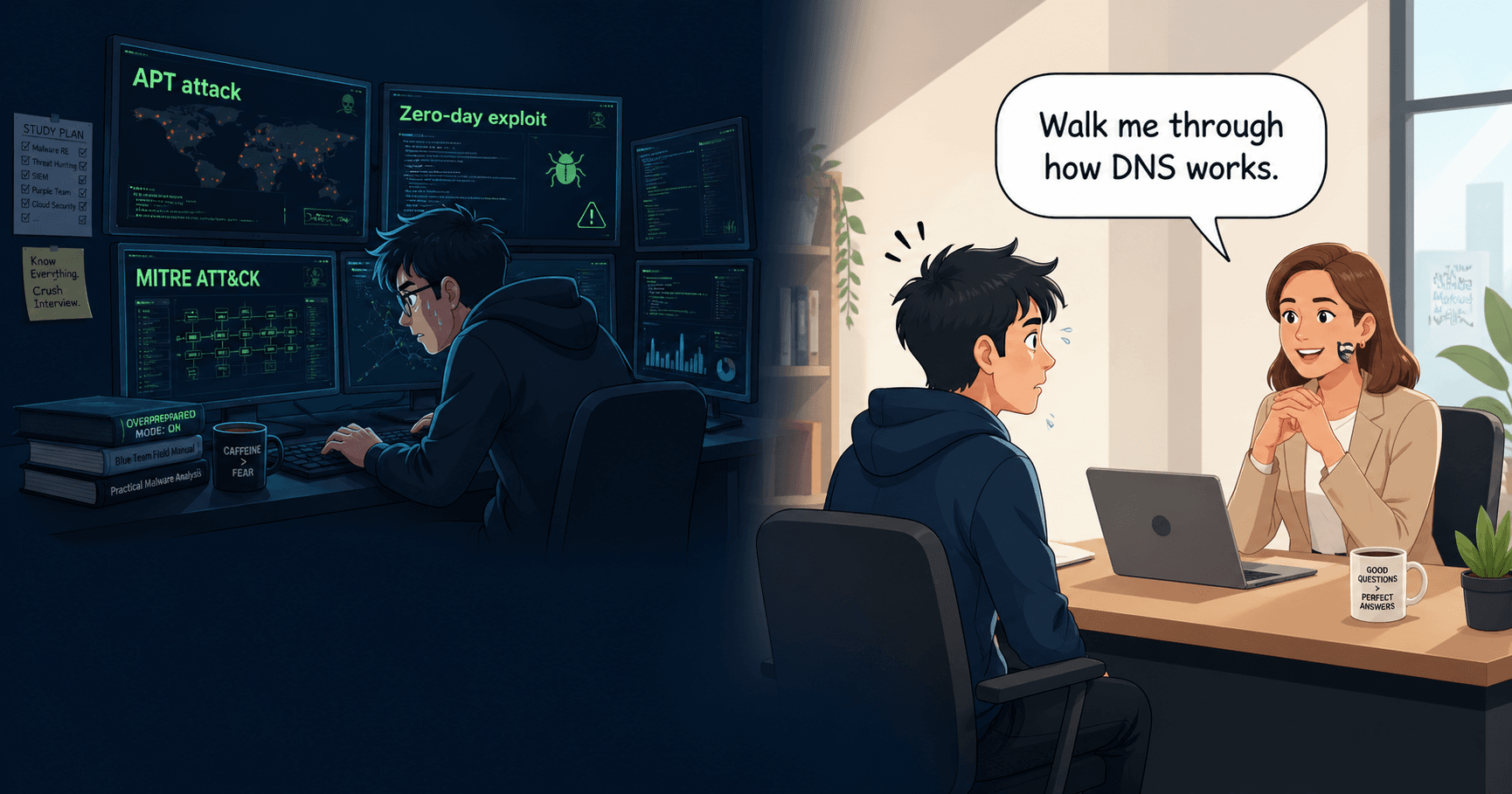
SOC to Pentester: A Realistic Timeline and What Most Guides Leave Out
The most common career question in cybersecurity goes something like: "I am a SOC analyst and I want to be a pentester. How do I get there?"
The standard advice (get your OSCP, do CTFs, apply) is not wrong, but it leaves out the hard parts: how long this realistically takes, what to do with the skills you already have, and the specific gaps that trip up SOC-to-pentest candidates in interviews.
If you are six months into a SOC role and want to be a pentester by next month, this article will disappoint you. If you are willing to put in 12 to 24 months of deliberate skill-building, the transition is achievable, and your SOC background gives you real advantages that pure offensive candidates lack.
What actually transfers
SOC experience gives you skills that many career-switchers from IT support or development lack, and interviewers for pentesting roles notice this.
Investigation mindset. Good SOC analysts understand how to work through a problem systematically. They form hypotheses, gather evidence, and test what they think they know. This is directly applicable to penetration testing, which is fundamentally an investigation from the attacker's perspective.
Understanding what defenders see. This is a genuine advantage. SOC analysts know which artifacts generate alerts, which logs get captured, and what behavior patterns look suspicious. This knowledge translates directly to being a more effective and stealthy pentester. When you know what the blue team is watching, you can work around it or test whether their detections actually work.
Network knowledge. Time spent correlating network events in a SOC builds intuition about normal versus abnormal network behavior, protocol characteristics, and traffic patterns. Pentesting requires network enumeration and lateral movement skills that build on this foundation.
Incident familiarity. Having seen real attacker techniques through alerts and investigations means you are not learning from textbooks alone. You have mental models of what actual compromises look like, which helps when you are trying to replicate them.
What you will need to learn
The gaps are real and worth being honest about.
Offensive tooling and technique depth. Knowing that attackers use Cobalt Strike is different from knowing how to operate it, configure malleable C2 profiles, and evade endpoint detection. You will need to build hands-on offensive tool experience: Metasploit, Burp Suite, BloodHound for AD attack paths, common exploit frameworks, and the underlying techniques they implement.
Methodology for structured assessments. Pentesting is not just attacking a target. It is scoping the work, following a methodology that covers the agreed attack surface, documenting findings clearly enough that a developer or network engineer can reproduce and fix them, and communicating risk to stakeholders with varying technical levels. The report writing side is underestimated by most career switchers.
Web application security. Unless your SOC work specifically covered web app attacks, web application testing is probably a gap. SQL injection, cross-site scripting, authentication and authorization flaws, and API security are the most common finding categories in web application assessments. OWASP's resources and PortSwigger's Web Security Academy are both solid starting points.
Binary exploitation and low-level techniques. This matters more for some roles than others. Network penetration testing at mid-level does not require deep binary exploitation knowledge. Red team and vulnerability research roles often do. Know which type of pentesting you are targeting.
A realistic skill-building path
Months 1 to 6: Foundations
Start with TryHackMe's structured learning paths if you are new to offensive techniques. The Jr Penetration Tester path covers the concepts you need before moving to challenge-based platforms. Run through it deliberately, not rushing to complete rooms but actually understanding the techniques you are using.
Set up a home lab with an Active Directory environment. Practice the attacks you have seen in SOC alerts from the other side: run Kerberoasting, observe what artifacts it generates, practice the investigation and then practice the attack again. This builds bidirectional understanding that is genuinely rare.
Start PortSwigger Web Security Academy. Work through the server-side vulnerabilities first, as they are the highest-value findings in most web assessments.
Months 6 to 18: Practical experience
Move to HackTheBox. Retired machines have write-ups you can reference when stuck, which makes them more educational than newer machines where you might grind unproductively. Work through a mix of difficulty levels and note what techniques keep appearing.
Consider the eJPT (eLearnSecurity Junior Penetration Tester) as an early practical certification. It is less prestigious than OSCP but much cheaper and serves as a confidence-building milestone. It also validates that you can work through a structured assessment, not just individual challenges.
Begin working toward OSCP. The Offensive Security PEN-200 course is the standard preparation path. Budget two to three months of consistent evening and weekend practice. The exam is 24 hours and requires compromising multiple machines, so stamina and systematic methodology matter as much as technique knowledge.
Throughout: Build your documentation habit
Write up every machine or challenge you complete. Not for a blog (though that helps), but to build the report-writing muscle you will need in the job. Describe the vulnerability, the reproduction steps, the evidence, and the remediation. This habit pays off significantly in interviews, where you will often be asked to describe a finding you have documented.
How to present your SOC background in pentesting interviews
Do not downplay your SOC experience. Lean into what it actually gives you.
When you are asked about your experience with detection evasion, you can speak from both sides. This is the kind of dual perspective that pentest interviewers value. You know which artifacts defenders look for because you spent time looking for them. When you are asked how you would approach post-exploitation, you can explain your thinking in terms of what would and would not generate alerts, which is a perspective many offensive candidates cannot offer.
Frame your background as: "I understand the defender perspective, and I am building the offensive skills to complement that." This is a credible story because it is accurate.
Common mistakes in this transition
Rushing the OSCP. The certification matters less than the skills it represents. Candidates who pass OSCP through sheer determination without genuinely understanding the methodology will struggle in interviews when asked to explain their approach in depth.
Skipping web application security. Many SOC analysts focus their lab time on network and AD attacks because that is what they have seen. Web application security is a significant portion of most pentesting scopes and interviews.
Neglecting the soft skills. Pentesting reports are the primary deliverable of most assessments. Clients who cannot act on your findings do not get value from the engagement. Interview panels at consulting firms specifically assess whether candidates can communicate findings clearly.
Treating CTFs as the only preparation. CTF challenges are useful for learning techniques, but they are not structured like real assessments. Add practice that involves scoping, methodology, and documentation alongside the technical challenges.
The realistic timeline
For someone starting from a SOC analyst role with no prior offensive experience: 12 to 18 months to be a competitive candidate for junior pentesting roles, assuming consistent practice of 8 to 15 hours per week outside of work.
This assumes completing OSCP or a comparable practical certification, building a portfolio of documented practice, and having hands-on experience with web application, network, and AD attack techniques.
It is not a short path, but the SOC background does compress it compared to someone starting from scratch.
Whether you are in SOC now or already making the switch, MyKareer has questions for both paths. Practice where you are.